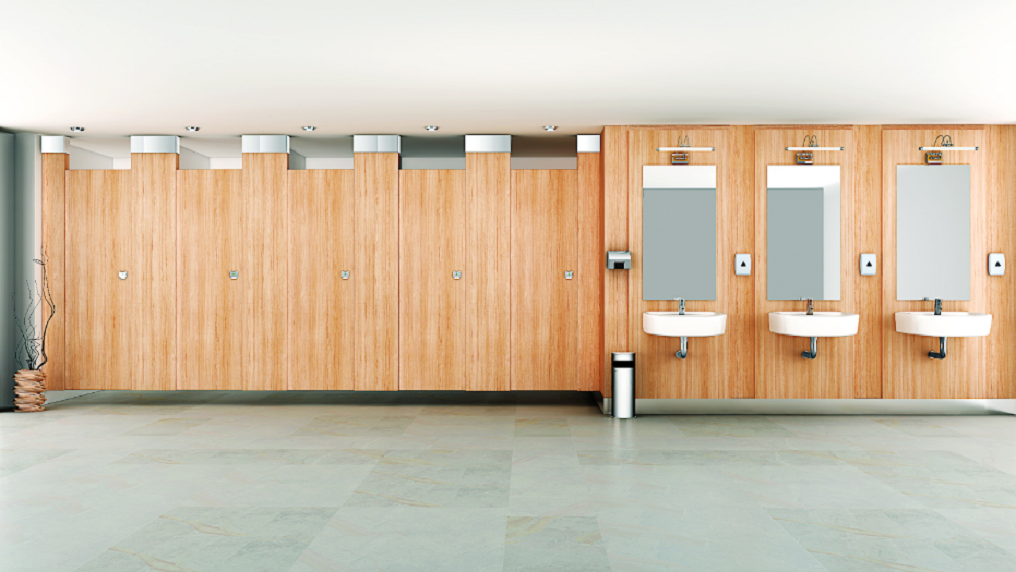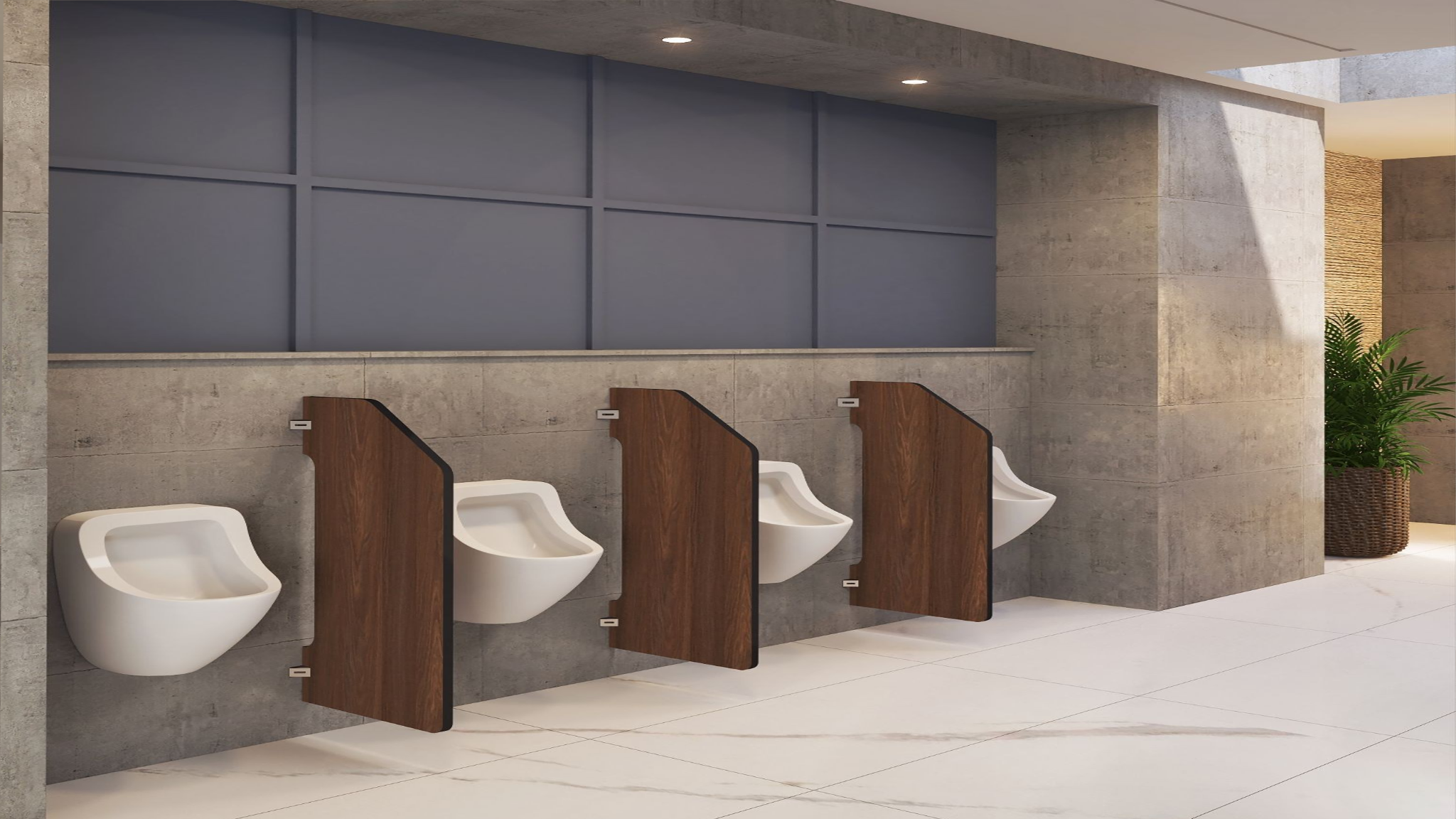
Urinal partitions play a critical role in shaping hygiene, privacy and visual order within commercial washrooms. As expectations around cleanliness and durability continue to rise, traditional materials are increasingly falling short in environments exposed to moisture, frequent cleaning and heavy use. Amid rising expectations, facility managers often find it challenging to choose the best material for urinal partitions offering both structural stability and design flexibility. To help, in this blog, we’ll explore how different urinal partition materials compare, along with their key pros and cons. Let’s start with understanding the importance of urinal partitions in commercial washrooms.
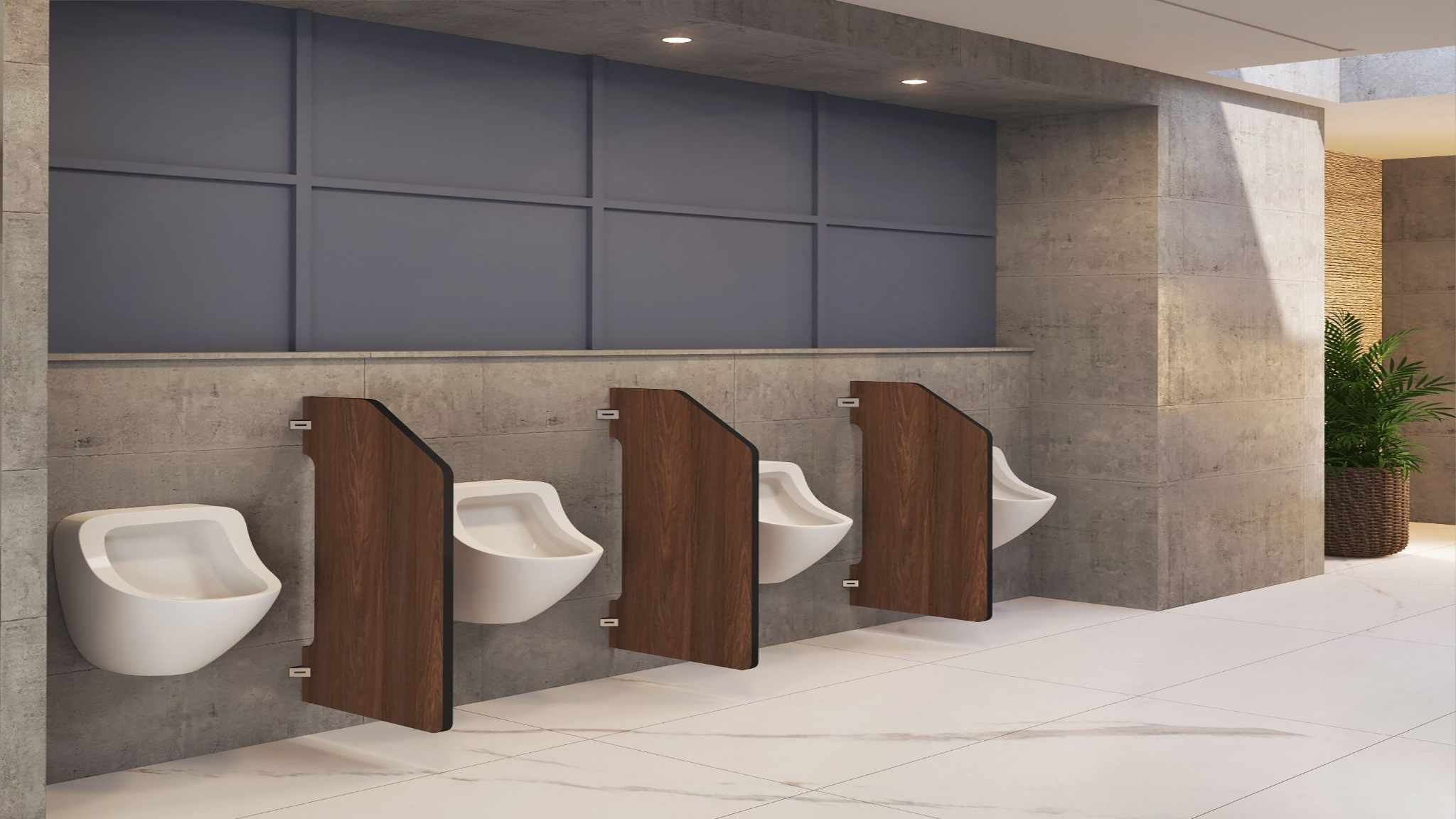
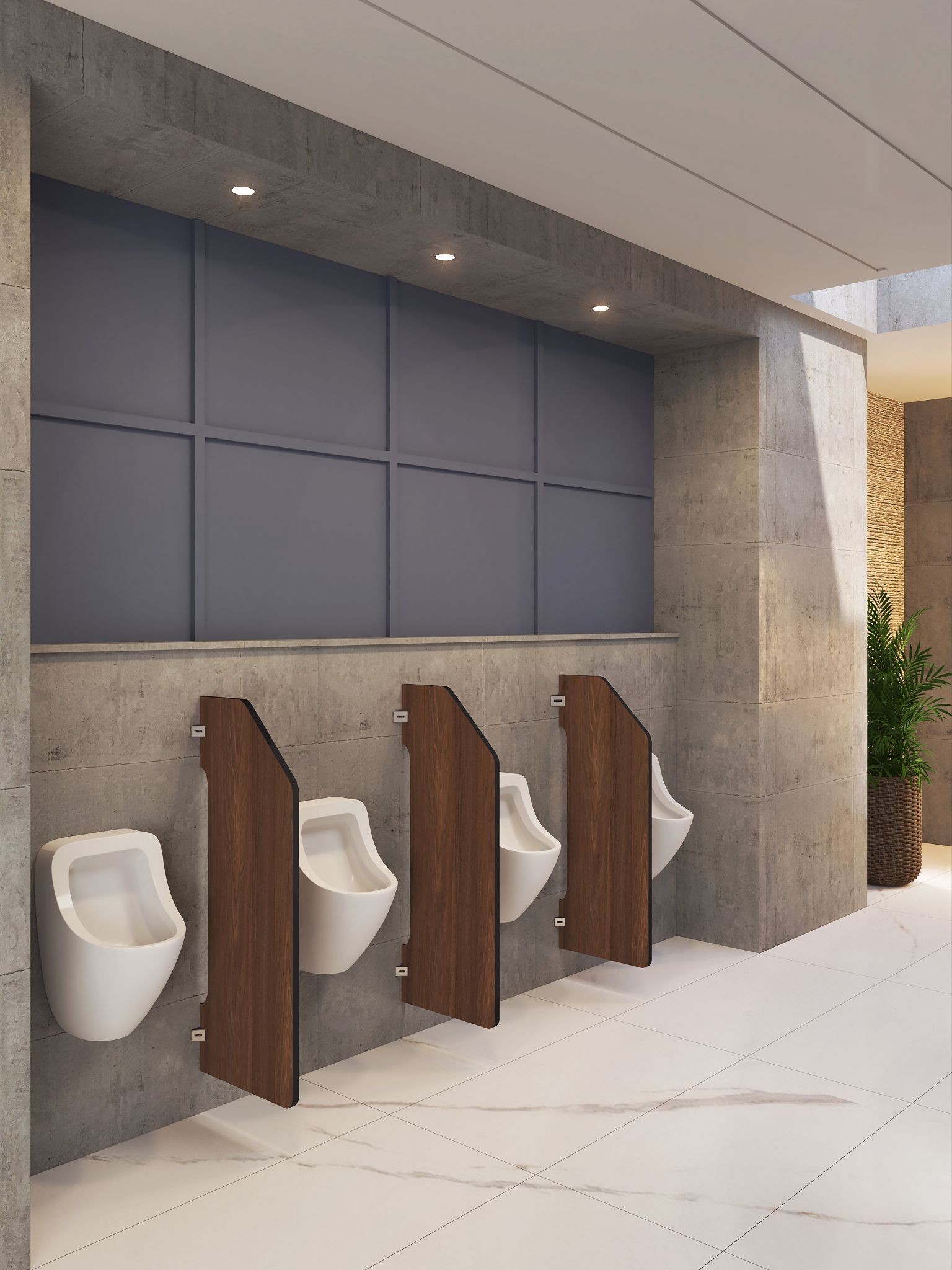
Urinal partitions for commercial washrooms play an important role in shaping how the space functions and feels. Their presence supports a more organised layout and contributes to a washroom experience that feels intentional and well-planned.
Key reasons urinal partitions are considered essential include:
Read Also: Types of Urinal Partition Material for Commercial Restrooms
Material selection directly influences how well urinal partitions perform over time, especially when long-term durability and upkeep are critical. Understanding how different urinal partition materials behave helps planners evaluate performance expectations before comparing specific options.
Key factors to evaluate include:
Urinal partitions in commercial washrooms are most commonly specified using three material types, each chosen for different practical and operational reasons. These include HPL urinal partitions, stainless steel urinal partitions and PVC-based systems. Understanding the basic nature of these options provides useful context before examining how each material performs, looks and maintains itself in real-world settings. The sections that follow explore these materials individually, allowing for clearer comparison and more informed decision-making.
HPL urinal partitions are made from high-pressure compact laminate, produced by compressing multiple layers of kraft paper impregnated with resins under controlled heat and pressure. The result is a dense, self-supporting panel that performs reliably in shared toilet environments.
Key strengths of HPL urinal partitions:
Read Also: HPL Restroom Partitions : A Perfect Blend of Utility, Safety, and Aesthetics
Stainless steel urinal partitions are typically manufactured from metal sheets formed into rigid panels and finished with brushed or matte surfaces. They are often specified in settings where a utilitarian appearance and structural rigidity are prioritised.
Key strengths and limitations of stainless steel urinal partitions:
PVC urinal partitions are manufactured from rigid plastic boards designed to offer basic separation in washroom environments. They are generally specified for washrooms where basic water resistance and cost efficiency are required, and long-term structural rigidity is less critical.
Key strengths and limitations of PVC urinal partitions
Each material used for urinal partitions performs differently when assessed across durability, hygiene support, maintenance effort, design flexibility and long-term value. The table below offers a clear, side-by-side overview to support informed material selection based on functional priorities rather than preference alone.
|
Evaluation Criteria |
HPL Urinal Partitions |
Stainless Steel Urinal Partitions |
PVC Urinal Partitions |
|
Durability |
High structural stability with strong resistance to impact and daily wear |
Very high structural strength but prone to surface denting |
Moderate; more susceptible to surface scratching and deformation under frequent impact |
|
Hygiene support |
Non-porous surface; select premium variants offer anti-bacterial surface treatment to support hygiene between cleaning cycles |
Non-porous but shows fingerprints, smudges and water marks more visibly, increasing cleaning frequency |
Non-porous; hygiene performance relies primarily on regular cleaning |
|
Maintenance effort |
Easy to clean; minimal surface marking |
Requires frequent wiping to maintain appearance |
Easy to clean initially, but surface wear may become visible sooner in regular-use environments |
|
Design flexibility |
Wide range of colours, textures and finishes |
Limited to metallic tones and industrial finishes |
Restricted colour and finish options |
|
Visual consistency over time |
Retains finish and appearance with regular use |
Appearance can dull or mark with frequent contact |
May show wear and ageing earlier |
|
Cost positioning |
Mid to premium, balanced against long lifecycle |
Generally higher material and fabrication cost |
Lower initial cost |
|
Lifecycle value |
Strong long-term value due to durability and low upkeep |
Durable but higher maintenance effort affects lifecycle cost |
Shorter service life in high-traffic settings |
|
Best-suited applications |
Offices, airports, commercial buildings and other high-use washrooms |
Infrastructure-led or industrial environments |
Low-traffic, short-cycle or budget-sensitive washrooms |
When assessed side by side, high-pressure compact laminate emerges as the most balanced and future-ready solution for urinal partitions in commercial washrooms. It combines structural stability, ease of maintenance and design flexibility in a way that stainless steel and PVC struggle to match consistently over time. Beyond performance, select premium HPL anti-bacterial urinal partitions addresses growing expectations around cleanliness in shared spaces. This combination of durability, visual control and hygiene support explains why HPL is increasingly specified as the preferred material across modern commercial restroom projects.
Read Also: Why You Must Consider High-Pressure Laminate For Your Toilet Cubicles
The suitability of urinal partitions for commercial washrooms is influenced by factors such as user volume, cleaning frequency, design intent and regulatory expectations.
Common applications include:
HPL urinal dividers are designed in different configurations to address layout planning, privacy requirements and hygiene considerations across shared washroom environments. Greenlam Sturdo’s Altura Series offers thoughtfully engineered HPL urinal dividers that adapt to varied commercial restroom layouts.
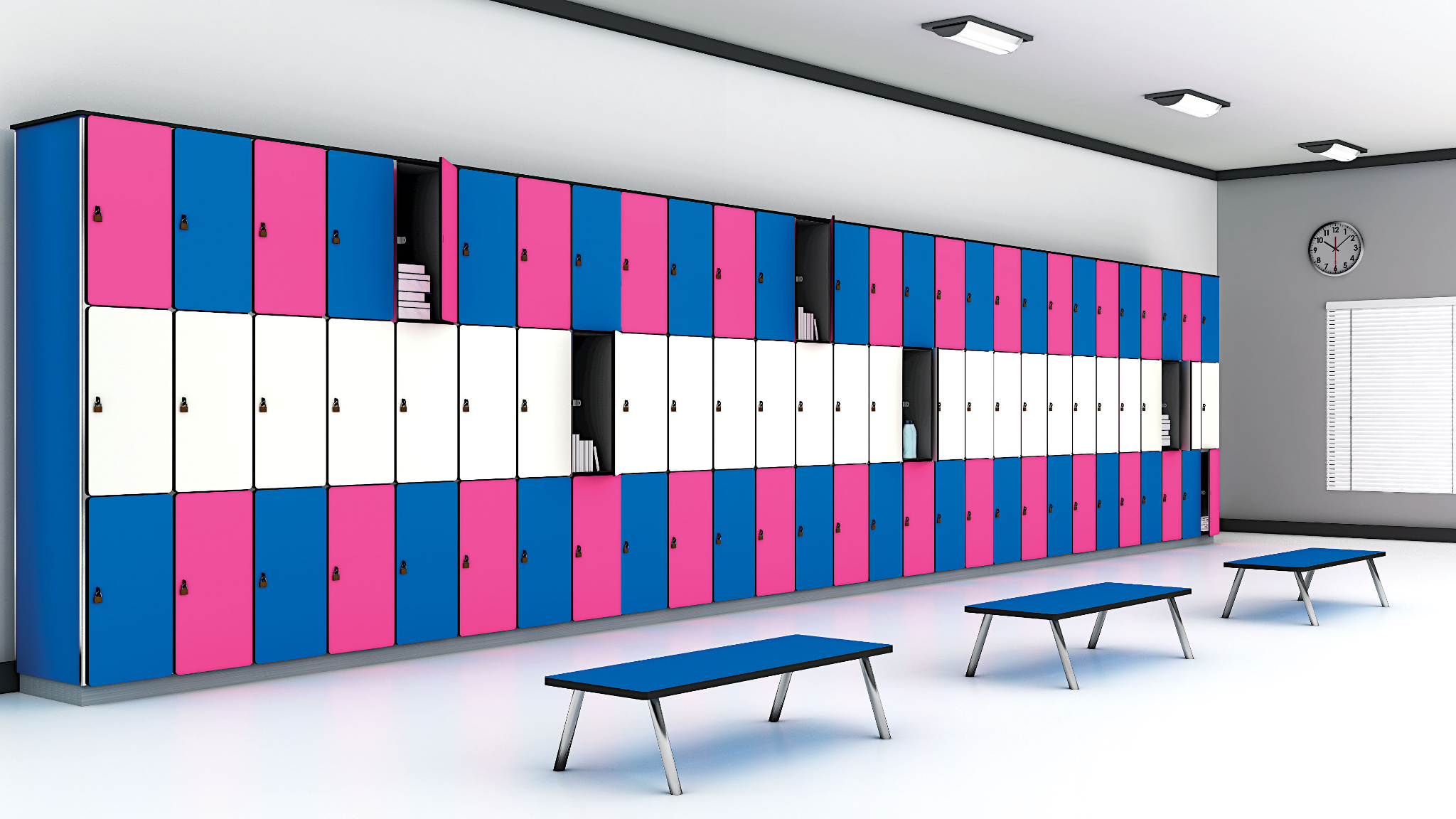
Choosing HPL urinal partitions allows commercial washrooms to achieve a balanced combination of hygiene, durability and visual clarity. Designed for long-term performance and ease of maintenance, these systems fit seamlessly into modern restroom environments. Greenlam Sturdo delivers this approach across a wider range of solutions as well, including restroom cubicles, toilet partitions, lockers and wall panelling, enabling cohesive washroom planning from a single, trusted source. You can explore finishes and layout possibilities using the Visualiser tool or fill out the contact form to connect with the team for specifications and project guidance.
HPL urinal partitions feature smooth, non-porous surfaces that are easy to clean. Select premium variants include anti-bacterial surface treatments to support enhanced hygiene standards.
Stainless steel urinal partitions resist rust when correctly specified, but surface finishes may show water marks, fingerprints and dulling, increasing maintenance effort in high-use washrooms.
PVC urinal partitions are better suited to low-traffic environments, as frequent impact and continuous use can lead to surface wear and reduced structural stability over time.
HPL urinal dividers are available in standard and customisable heights, widths and profiles, allowing flexibility to suit different layouts, spacing requirements and privacy needs in commercial washrooms.
Urinal partitions improve privacy, support better hygiene perception, organise shared washroom layouts and enhance user comfort, making commercial washrooms feel more structured and intentional.
Yes, urinal partition design can be customised through colour, finish and texture selection, especially with HPL systems that support cohesive integration with broader washroom interiors.
Greenlam Sturdo delivers well-engineered HPL urinal partitions backed by compact laminate expertise, design versatility, certified performance and end-to-end project support for commercial washrooms.
With proper installation and routine maintenance, HPL urinal partitions can maintain performance and appearance for many years, even in busy commercial washroom environments.

HPL Toilet Cubicles: A Perfect Solution for Kid-Friendly Restrooms